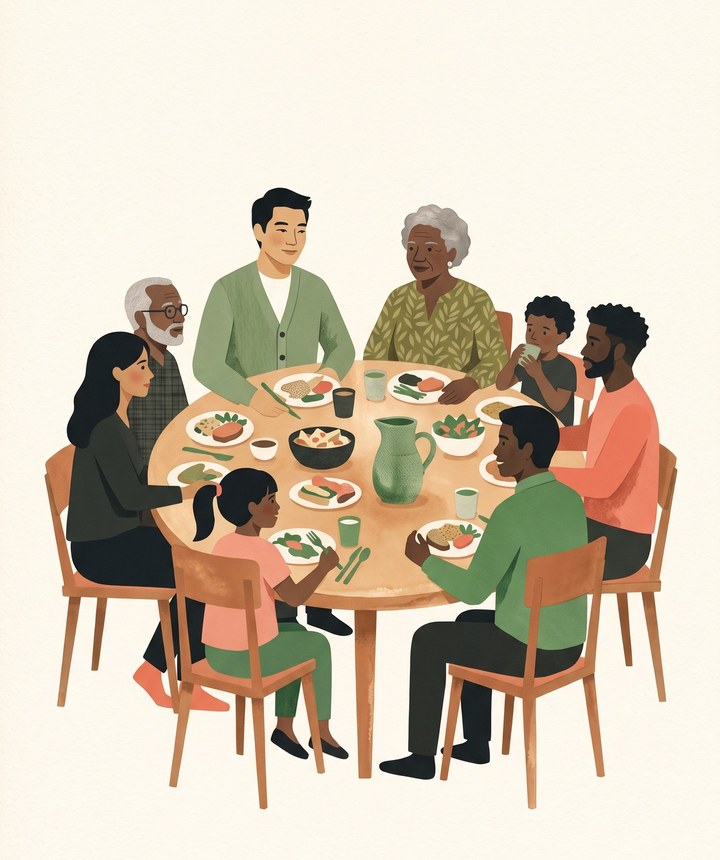
The short answer
- Start with the pattern you can observe: adults expect instant closeness or children feel forced to choose sides.
- A useful next experiment is to let connection grow while biological parents retain early discipline leadership.
- Avoid demanding a single-family identity before trust has formed.
How this can look in different contexts
Blended Families & Step-Relationships does not look identical in every relationship. Setting, power, age, stress and the history between people all affect what a behavior means and which response is realistic.
01
With younger children
Keep language brief, concrete and matched to development. Adults provide calm leadership while children are still building the skill.
Watch for: Adults expect instant affection or authority. A grounded first move is to protect the child's existing bonds.
Try saying: “You do not have to choose between caring about us and caring about your other home.”
02
With teens and adult relatives
Respect growing autonomy and privacy while keeping clear household limits. Influence works better when voice and dignity remain intact.
Watch for: Children are asked to choose sides. A grounded first move is to let closeness grow at its own pace.
Try saying: “We are building how this house works, and your experience matters.”
03
Across the family system
Notice roles, alliances and who carries tension. A response to one person can unintentionally keep a wider family pattern going.
Watch for: Different house rules become proof that one home is wrong. A grounded first move is to align adults privately on a few house rules.
Try saying: “You do not have to choose between caring about us and caring about your other home.”
Five-session workbook
Practice without trying to change everything at once
Use one session per day or spread the plan across several weeks. The point is to collect better information and test a small response, not to perform the process perfectly.
- Session 1
Map one recent moment
Write one event connected to building a new family culture gradually while respecting existing bonds, grief, loyalty and different household histories. Record only what a camera or recorder could confirm before adding your interpretation.
- Session 2
Separate the key ideas
Explain loyalty bind, step-relationship and household culture in your own words. Note which distinction changes how you see the event.
- Session 3
Observe before intervening
Watch for these specific clues without hunting for proof: adults expect instant affection or authority; children are asked to choose sides; and different house rules become proof that one home is wrong.
- Session 4
Run a small experiment
Try this sequence: protect the child's existing bonds, then let closeness grow at its own pace, followed by align adults privately on a few house rules. Finish by add authority as trust and role clarity grow.
- Session 5
Review the evidence
Ask yourself: Is anyone being rushed into a role? Then consider, can children speak warmly about every parent? Finally ask, which rules truly need to match across homes? Record what changed and what did not.
What blended families & step-relationships means
Blended Families & Step-Relationships is about building a new family culture gradually while respecting existing bonds, grief, loyalty and different household histories. It gives you a way to describe what is happening without reducing a person to a label.
The useful unit is a repeated interaction: what happened, what each person understood, what each person did next and whether the result improved safety or connection. Context can explain behavior, but it does not cancel impact or responsibility. For an adjacent perspective, Healthy Family Dynamics adds a related lens: Make roles, rules, decision-making and emotional patterns visible enough to improve them.
Key terms to know
| Term | Plain-English meaning |
|---|---|
| Loyalty bind | Feeling that caring for one person betrays another. |
| Step-relationship | A bond that needs time and cannot be forced by title. |
| Household culture | The routines and rules a family creates together. |
How to recognize the pattern
Look for repetition and impact rather than one imperfect moment. The following signs are reasons to become curious, not proof of a diagnosis:
- Adults expect instant affection or authority
- Children are asked to choose sides
- Different house rules become proof that one home is wrong
A real-life example
A stepparent enforces a new bedtime in week one and meets strong resistance. Early leadership from the biological parent, with the stepparent building connection, lowers the loyalty pressure.
Notice that the example names actions, interpretations and consequences. That creates more useful information than deciding who is “too much,” “cold,” “difficult” or “the problem.” If adults expect instant closeness or children feel forced to choose sides, continue with How to Run a Useful Family Meeting for a connected skill and a different practical route.
A practical blended families & step-relationships method
Use this sequence as a small experiment. Complete one step before adding the next, and keep the conversation narrow enough that both people can tell what changed.
- 01
Protect the child's existing bonds
Start with what can be observed. Avoid motive, diagnosis and the words always or never.
- 02
Let closeness grow at its own pace
Stay specific, allow a real response and choose behavior that can be repeated under ordinary conditions.
- 03
Align adults privately on a few house rules
Stay specific, allow a real response and choose behavior that can be repeated under ordinary conditions.
- 04
Add authority as trust and role clarity grow
Compare the result with the original concern. Keep what helped and revise what did not.
| Instead of | Move toward |
|---|---|
| Demanding a single-family identity before trust has formed | Let connection grow while biological parents retain early discipline leadership |
| Arguing about hidden motive | Adults expect instant closeness or children feel forced to choose sides |
Words you can use
Borrow the structure, then make the words sound like you. A good sentence describes your experience and leaves room for the other person's answer.
“You do not have to choose between caring about us and caring about your other home.”
“We are building how this house works, and your experience matters.”
If there is coercion, surveillance, threats, sexual pressure or violence, joint communication exercises may increase risk. Seek confidential specialist safety planning. If danger is immediate, contact local emergency services.
What useful progress can look like
Progress is evidence that the pattern is becoming easier to notice, discuss or respond to. It does not require instant comfort, complete agreement or a promise that nothing difficult will happen again.
You notice when adults expect instant closeness or children feel forced to choose sides before the interaction has fully escalated.
You can discuss loyalty bind without turning the concept into a fixed label or verdict.
At least one person can try a concrete response: let connection grow while biological parents retain early discipline leadership.
The sentence “You do not have to choose between caring about us and caring about your other home.” produces clearer information, even when the answer is not the one you hoped for.
When self-guided practice is not enough
General parenting and family guidance cannot assess a child's development, health or safety. Seek an appropriately qualified professional when behavior changes sharply, distress persists, school or daily functioning is affected, or a caregiver feels unable to keep people safe. Suspected abuse, neglect, self-harm or immediate danger needs prompt local professional or emergency support rather than a family meeting or behavior chart.
Questions to ask yourself
- Q1Is anyone being rushed into a role?
- Q2Can children speak warmly about every parent?
- Q3Which rules truly need to match across homes?
Build the next skill
This topic connects to other parts of relationship health. Use the guides below when you need the next layer rather than repeating the same conversation.
Frequently asked questions
Blended Families & Step-Relationships FAQ
What does blended families & step-relationships mean in everyday life?+
It means building a new family culture gradually while respecting existing bonds, grief, loyalty and different household histories. The goal is not to label someone. It is to notice a pattern accurately enough to choose a useful response.
What are common signs that this topic needs attention?+
Start with observable clues: adults expect instant affection or authority, children are asked to choose sides, or different house rules become proof that one home is wrong. One event may mean little; repetition and impact matter more.
What is one practical first step?+
Begin by doing this: protect the child's existing bonds. Keep the experiment small, specific and safe enough to review afterward.
Sources and further reading
These authoritative links provide background for this guide. THEM.YOU writes and reviews its summaries independently; listing a source does not imply endorsement.
- American Academy of Pediatrics: Improving family communication ↗
- CDC: Preventing adverse childhood experiences ↗
Reviewed August 19, 2026. Educational content only; not a diagnosis or substitute for individualized professional care.